Search This Blog

Saturday, June 8, 2019

Scientists tend to remain secluded because they mostly delete the people from their lives who do not buy their dreams and joy

Scientists are crazy!!! People say that scientists are very secluded and elusive. In fact, it is a matter of sheer focus and not diffused thoughts that high-quality scientists strive for. Concretised thoughts materialize into some great findings, and hence, it becomes extremely important for "this class of people", in other words, true scientists to stay secluded/elusive.

Scientists live for inner joy or rather in search of inner joy for finding the unknown. Hence, the best way to excel as a true scientist is to:

Delete the people who steal your joy

Either you can be with the people who steal your joy and do not buy your dreams or lead a world-class life in science-YOU CANNOT DO BOTH

In society, there are people who are there to steal our joy because they do not believe in your dreams and are too scared. It is up to us to stay attached to such people (howsoever close they are to us by blood relation or even in marriage) or to detach from them, see them less often and do not let them diminish your power. Do not let others take away your power to be innovative and to do good science.

This is how we can make a list and control our behavior towards them to protect us from such energy vampires.

Sr No
People who are elevating my joy
Comments
People who diminish my joy
Comments


Comparison with others is a thief of joy. It is always good for a scientist to remind herself/himself that, one cannot compare apples with oranges. 

Hence, do not allow anybody to compare you with someone else.
1.                  Peruse your dreams.
2.                  Do not bother to follow the crowd. People might call you freak, weird.
3.                  Be yourself.
4.                  How far you have traveled in terms of your learning, good health, loving and trustworthy relationships with your peers in science, inner growth, and spirituality are the most important.


Finally, the EGO is the voice of your fear.  Never, fear to explore the unknown and have an open mind and heart for continued learning.
  

Sunday, April 14, 2019

Influencing to change the course of your mentees


Being a good communicator as a mentor, and believing that the scientific world needs to be continued in a better fashion then it is high time to build that conviction. When mentors operate at the optimal/maximal potential and are egoistic, the science they do revolves around then, starts with them, persists with them and ends with them. On the other hand, visionary and legendary mentors always think, believe and perpetuate with them the legacy building strategy. For example, there is a scenario where there is this person ‘A’ who has passed with excellent grades in school, graduation, post graduation, Ph.D., postdoctoral and has published excellent papers and becomes a mentor. ‘A’ then starts mentoring Ph.D. students who are brilliant and excellent. Only brilliant/intelligent and excellent students who have secured great grades get attracted to the mentor ‘A’ for having a great track record. However, the person ‘A’ remains in his bubble of ego starts getting terrified with the performance of his students. Hence, in the long run, both the mentor and the mentee fail to perform well in science. The performance of this high achiever and his/her group gets compromised not because of their lack of intelligence, but because of lack of transparency, trust and a sense of professional insecurity.

 Now, there is another scenario. There is this person ‘B’ who got good grades throughout the career (school, graduation, Ph.D., postdoctoral), but did not do excellent. ‘B’ goes on to mentor Ph.D. students and gets good, average, and some below average students. The focus of ‘B’ is continued progress with a little winning strategy each day. ‘B’ believes in team-building as 1+1, just not two but eleven. ‘B’ works harder in a disciplined manner every day, trusts his group members, and coaches them to do good science. As a result, the team of ‘B’ focuses on developing science, is more relaxed, confident, energetic with small daily improvements. Long run brings more success to the team of the mentor ‘B’ and not ‘A.’

The bottom line: You might be brilliant with exceptional analytical skills. However, most of the times, if you (whether a mentor or a mentee) do not work to strip off the respective egos, then, the brain gets hijacked, and the performance goes down.

Situations governing good performance in Science 

Tuesday, February 19, 2019

Mentors guide you from being unclear to clear

Clarity is about deconstructing the emotional clutter.

We come across other people who are very confused and complaining about wrong things happening or else, a sense of stuck-up attitude in their career. If it is the case with any of you, who are reading my blog right now, then it is high time to find a right mentor who will declutter your inner core.

In the path of career, a person is influenced by various forces such as parental programming, friends, peers, societal pressure so on and so forth. Often, we come across people who will go and ask anybody and everybody regarding their opinion which career path to choose. This process of looking for help outside you, most of the times take the focus off from one's own self.  Finally, the person is gone with the wind and ends up in taking up a career that has been impressed upon more by anybody close to him/her at that point of time.  Or sometimes, an individual ends up with choosing the career whimsically. Hence, in the end, the individual is cluttered and confused, isn't it?!! However, the person continues to carry on with the career without even understanding his/her liking and competence for the same.

Now, coming to an activity which one person loves doing as a hobby apart from his/her career. In fact, in many instances, such hobbies are being undertaken with a lot of enthusiasm and competence. So, here is a clear indication that the main career and the hobby should actually be flipped. In other words, the hobby ought to be the primary career for the individual and vice versa. It is, in fact, straightforward to get identified what you are meant for from right from your true mentor.

Now coming to the title of this blog-"Mentors guide you from being unclear to clear in your career”. Who are such mentors? How do we find such mentors?

So, here is the answer


Thursday, February 7, 2019

What attributes are looked for while selecting a candidate for a PhD position in Science and why?

Primary education and higher education are the classifications. Well, while we talk about Ph.D. definitely, it comes under higher education because not everyone and anyone are interested, or, in other words, is capable of doing it. Is Ph.D. just an education leading to an academic degree or it is more than that? First of all, I will try enlightening the people from small places without much exposure to the degree Ph.D. It is a doctoral degree having the full form “Doctor of Philosophy” or “Doctor Philosophiae” in Latin. This terminology is irrespective of the specialization-Science, Technology, Engineering, Medicine, Commerce, Law, Humanities. If you have a bit of curiosity and common-sense, you should be able to understand why this degree is called the “Doctor of Philosophy”? This is because it is more than just an academic degree in which the bookish knowledge, specific course curriculum and passing the exams and getting good grades does not count much. In fact, there is no particular course curriculum for a Ph.D. degree except for the Ph.D. course-work in the early part of Ph.D. that makes you acquainted with the recent advances in the field. It is your novel work in the area that takes somewhere from 3 to sometimes even 9 years renders you eligible for a Ph.D. degree. After the completion of your work, you need to publish the same in the form of your Ph.D. thesis, and also manuscripts in journals of international repute.


It is hence, crucial for the candidates aspiring for a Ph.D. position to be aware of the things mentioned above. Once you are aware, you will try doing your homework by first understanding yourself whether your inner voice drives you to do Ph.D. and then collecting information/data on how to go about enrolling for your Ph.D. Before registering for a Ph.D. degree, there are often stringent selection criteria. In this blog, I am highlighting the requirements that make a Master’s/ or else Honors-Bachelor’s degree holder enroll in a Ph.D. position in Science.

This goes without saying that one needs to have all eligibilities such as should have secured moderately good grades in their previous degree. Many of the places, Ph.D. aspirants also need to qualify the entrance examinations to be eligible for Ph.D. coursework followed by taking of qualifying examination proving the initiation of their research topic. The trick is once you clear the qualifying exam, or else are directly called for an interview, the respective research institutes look for various attributes. Such attributes include one’s curiosity and energy to understand new out of the box research questions. Often, it means the formulation of smart research questions. For this attribute, the research institutions look forward to a curious bent of mind that is able to think “out of the box.” “Out of the box” thinking is not a vague term, but if one exercises his/her mind, various research questions will flow. The second attribute is skill-sets to do the specific experiments. Many people join their Ph.D. research after being trained in the particular skill sets. However, other gets themselves trained only during the first couple of years of Ph.D. either from their peers and colleagues or from their superiors. Indeed, the most important thing that is being looked from a Ph.D. aspirant is their grit and determination to carry them through the entire Ph.D. process. The Ph.D. process is very rosy in the beginning when your supervisor and you decide the Ph.D. topic, messy in the middle when you are already finished with your Ph.D. questions, and also some training, but not sure whether your experiments are heading in the right direction. This is the most challenging phase of your Ph.D. Most of the Ph.D. researchers tend to blame their supervisors, Ph.D. topic, the institute, the lab environment, etc during this messy period of their PhDs. This phase of Ph.D. will actually decide whether you will come up with excellent work, mediocre work or else end up being a Ph.D. drop out. The Ph.D. researchers who find everyday excitement by turning their failed experiments into new directions come out with outstanding Ph.D. work. Of course, some mediocre researchers somehow manage to pull through the messy phase of their Ph.D. and draw some conclusions out of their failed experiments and end up with some quick results.

Most importantly, in Ph.D. work, it can be either excellent or mediocre; there is no scope of a poor Ph.D. work. Poor Ph.D. work does not lead to a Ph.D. thesis, and hence such people are drop-outs. Finally, in the end, one comes out with gorgeous and clear answers to the Ph.D. questions, and that makes your Ph.D. thesis.

Summarizing,
A Ph.D. aspirant:
1.    Needs to understand that Ph.D. is just not an academic degree through classroom teaching like Master and Bachelor.
2.    Needs to have a lot of genuine curiosity for the subject.
3.    Needs to have grit, patience, and discipline to pull through the tough times of Ph.D.
4.    Needs to burn the midnight oil for experiments when their friends/peers in regular jobs are enjoying the time.
5.    Needs to understand that Ph.D. work is not meant for attaining prestige or a high position in society.
6.    Needs to realize that earning money cannot be directly linked to the Ph.D. degree.

Finally, that is the reason the degree is known as the “Doctor in Philosophy” irrespective of the specialization.


Tuesday, January 8, 2019

Under my research mentorship, there are research fellow positions available

Research Fellow posts vacant in the SERB-DST funded project in “Stem Cells and Regenerative Medicine Division” in the Yenepoya Research Centre, Yenepoya (Deemed to be University), Mangalore-575018, Karnataka, India

We are looking for committed candidates for Research fellow position(s) who are interested in enrolling for their PhDs in the Stem Cells and Regenerative Medicine Division, Yenepoya Research Centre, Yenepoya (Deemed to be University), Mangalore-575018, Karnataka, India

Name of the Position(s): Research Fellow that can lead to a PhD

Number of posts- 02, Out of which one is funded by DST-SERB and for the other post-CSIR/UGC/DBT-JRF-NET qualified candidates with their own fellowship to need to apply

Title of the project: Differentiation of human pluripotent stem cells into functional β islets using bioactive lipids.’’

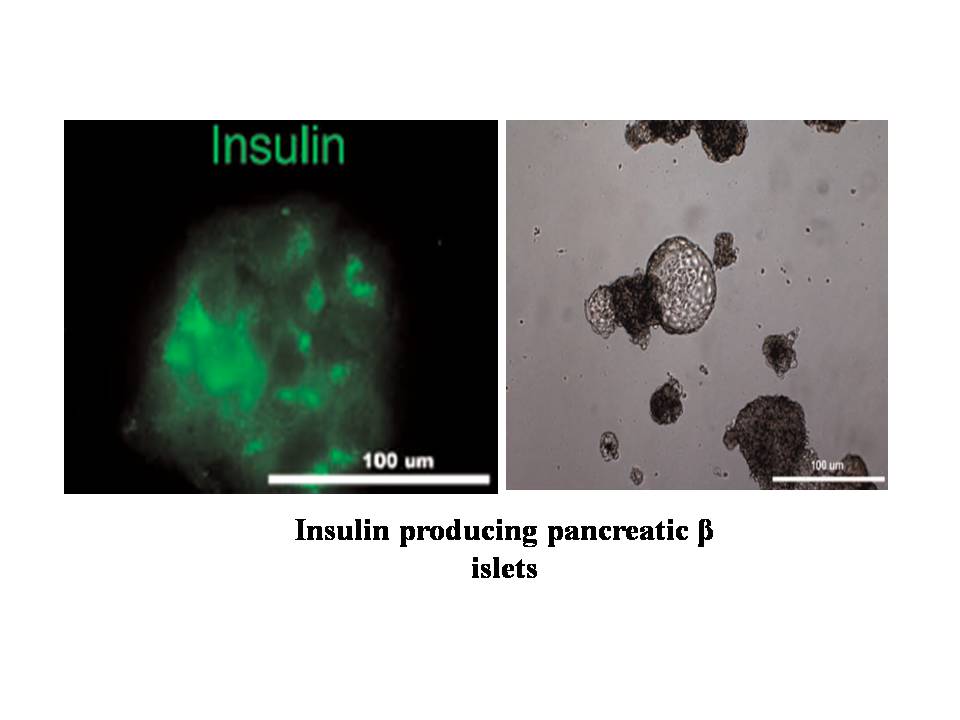
The brief description of the project: This project aims at developing efficient methods for in vitro generation of pancreatic β islets for stem cell transplantation based therapeutics for diabetics. The scope of this project is only in-vitro generation/differentiation of pancreatic β islets from human pluripotent (embryonic or induced pluripotent) stem cells. The underlying work of the Principal Investigator Dr. Bipasha Bose can be available on the links https://www.ncbi.nlm.nih.gov/pubmed/22897387; https://www.ncbi.nlm.nih.gov/pubmed/24559920

Duration: 3 years

Monthly fellowship: INR 28,000 per month (consolidated). Own fellowship for the CSIR/DBT/UGC-NET qualified candidates

Infrastructural and research support: The institute has excellent infrastructure to support this project. The funding for consumables will be primarily from the SERB-DST funded project above, and partly salvaged from the other grants (extramural and intramural) of the Principal Investigator

Tenure: This position is purely temporary and is co-terminus with the project. However, the research fellows will be required/encouraged/allowed to register for her/his Ph.D. work in this/allied projects in the Yenepoya (Deemed to be University). Extension without fellowship can be offered to the research fellows with due considerations for the completion of the Ph.D. work

Essential qualifications: Master degree in any branch of biological sciences with a minimum of 55% marks. Candidates who have qualified any National Level eligibility test such as CSIR/DBT/UGC-NET will be preferred. Also, candidates who have prior experience of working in a research laboratory with a minimum of 2 years of hands-on research experience with mammalian cell culture, flow cytometry and any of the molecular biology techniques need to apply. Ability to work independently, and as a team player; candidates with emotional grit and with research publication(s) will be given preference. An excellent written and verbal communication skill in English is essential.

Work requirements: This project requires working in the cell culture and molecular biology laboratory for long hours. This work also requires working during the weekends for a few hours for attending to the cell cultures

CANDIDATES WHO ARE COMMITTED TO RESEARCH AND THOSE WHO WILL ENROL THEMSELVES FOR A Ph.D. POSITION ONLY NEED TO APPLY

How to apply: Interested candidates may submit their detailed CV with the subject line “Research Fellow position in DST project” to the PI: Dr. Bipasha Bose, Associate Professor., Yenepoya Research Centre, Yenepoya (Deemed to be University) via email to Bipasha.bose@yenepoya.edu.in, boseshenoystemcell@gmail.com on or before 26 Jan 2019. The interview will be conducted in the first week of February 2019

Hostel facilities are available with the institute

Only shortlisted candidates will be notified


Wednesday, January 2, 2019

Will you stop doing science if you face opposition, or else, they fail to give you credit,???

First of all, for the readers of my blog, I wish you all a significant and meaningful and scientifically productive New Year-2019!

The first point is, how did we come to do science when doing science is not the most popular thing to do. Neither doing science fetches big money, or else big name or fame. In fact, most of you, or probably all of you, must have come to this field and are continuing in this field for the search of a bigger 'Why,' rather than every other material pursuit. However, a lot of people are drop-outs from the field of scientific research. In fact, it is challenging to stay motivated in the field of science throughout one's life. However, we will be surprised to see a handful of people around us, who are in their late ages, but continue doing science, as motivated, as they were in their twenties and thirties!!!


                                                            Challenges in doing science

So, the answer to the theme of this blog is straightforward and is 'NO.' There are oppositions, injustices, partialities existing in the scientific communities, and also in research institutes. Despite that scientists grow and continue doing science much better day-by-day. There is, of course, an internal radar that drives a scientist to do better each day.

The most exciting part is, more the opposition, the better is the science done by the scientist. So, it is indeed not the case of heartbreaking when you, as a researcher or a scientist, face opposition, or not given due credit. In fact, it is the matter of rejoicing because you, as a scientist/researcher, get to identify the negative people in your surroundings and that your research is not creating, just ripples, but big waves in the mind of such people in your vicinity.

So, rejoice more, the more you face opposition, and more they fail to give due credit to you.

Of course, the bottom line is, one needs to get the due credit for the excellent work done. In that case, change the people around you so that you get due credit. How to do that??? If your workplace fails to give you the due credit. Change the workplace. It will surely be a better one.


Thursday, November 29, 2018

How do you find inner direction while doing science?

Hello! I am back after sometime now to write this blog on direction in doing science.
Direction means depth, direction means that we have proven XXX using the known techniques, now what next? What next that we need to look into is also a matter of understanding and direction. Most of the times, it becomes very boring and monotonous that people fail finding the right direction in proceeding further in science. Rather, it becomes a copying business just to get some experiments done in the same direction that somebody else has done. The quest for knowledge is missing in such cases.

Image result for Focus

The question is: 
  1. Should you continue in science if such phases arise in your research?
  2. Why do such phases arise in research?
  3. Is it common to all to have such phases in research?
Well, the answer is 'YES' to all of the above if you are not spending enough time with yourself pondering about your science and reading enough literature and synthesizing information together to come to a conclusion. So, what one should do to stay motivated in science with proper direction? The answer is
  1. Think about the science that you are doing. It has nothing to do with proving your science to your peers.
  2. Once you think enough you will have sufficient questions to answer that can actually guide you in the right direction.
  3. Once you have sufficient questions, you start looking for the solutions and believe me, one automatically gets subconsciously attracted to the scientific answers.
  4. And the answers are: Relevant literature that helps one to synthesize information for obtaining the answers or just logical answers.
  5. Hence, spending time with your science and voracious reading are the most important criteria to stay focussed and motivated in science.
Image result for Focus

Best wishes to all for doing focussed science!

Saturday, November 3, 2018

How to know if your scientific superior is exploiting/cheating?


 Bright young minds jump into the water called scientific research to find the pearls called more profound scientific knowledge. Such young people-boys and girls have an inclination to details, to understand how the life's process or universal processes work. Indeed, they want to make a career in research. Such young minds are indeed different from the rest of their peers who want to settle down with not so difficult or challenging tasks.

Most of the time, or preferably all of the time, the young aspiring scientists have to work under the supervision of some acclaimed senior scientists. If the young aspirants are lucky, they get considerate scientific supervisors/mentors who are interested in their mentee's progress. However, such near-perfect cases are rare in some of the developing countries which have high records of scientific corruption.  Although India has been spoken ill about regarding scientific misconduct especially plagiarism (https://en.wikipedia.org/wiki/Scientific_plagiarism_in_India), scientific exploitation is also not an exception here. Myself being an Indian and having worked in International and Indian laboratories, as well, and even with Indian origin senior Principal Investigators outside India (http://dishonest.biz/forum/index.php?topic=111.0), I have gained ample experience in identifying whether the scientific supervisor the young scientist is working with is fair/honest or is cheating. Here are the indicators that your supervisor is exploiting/ cheating:
  1. Asks the young researcher/scientists to carry on the experiments and report to him/her and behaves extra busy and unapproachable.
  2. Even if the young scientist/researcher carries out the experiments as directed/advised by the senior supervisor, the supervisor comes with an excuse to blame the young researcher of not having done the work well.
  3. When the supervisor tries to overburden the student/young researcher with tons of work without proper direction and tries wasting his/her time and does not engage in scientific discussions.
  4. Tries to create political rifts with other labmates and disharmony.
  5. Tries to waste the time of the young scientist/researcher by giving all his/her personal work most of the time.
  6. Tries to micromanage the young researcher about the time spent.
Isn't it atrocious? Most of the times, the young scientist/researcher keeps mum to such behaviors of the supervisor and treats him/her with much of reverence and respect. However, it's time for the young researchers to identify such conduct within the first three months of working so that his/her scientific career is not jeopardized.

Thank you for reading!

Watch out for my next blog "Reasons why the scientific superiors exploit/cheat the young researchers/scientists?"


Tuesday, October 9, 2018

How much you accumulate in doing science???

Accumulation is a practical term, such as accumulating material, possessions, land, cars, etc.... and the list goes endless. However, in the context of doing science, what does an individual accumulate? Is it a bunch of degrees, research papers, laboratory infrastructure, awards, research funding??? Well, apparently, 'YES.' Indeed, it is a matter of great pride for having worked/working in the world-class research laboratories, having bagged a bunch of high rated awards, having a grand laboratory infrastructure, lots of money in the form of research funding. Moreover, fat salary is another option, but it is much less, as compared to high rated white collar jobs. 

Scientists are crazy.................. Why do they spend their precious time doing something that is entirely incomprehensible to the common folk???!!! If you ask a scientist, who has been regularly doing science for the past ten years or more, they have something to say. The accumulation they look for is more than one can describe and comprehend. It is definitely not an accumulation, but a free flow of something. Something that increases gradually over time, the more you do it. It is none other than knowledge and perspective towards unknown. That is how scientific discoveries are made. Accumulation of knowledge builds up over a period, that improves the vastness of mind of a real scientist. Moreover, such wisdom is unfathomable to an ordinary man who passes his day in mundane daily activities in a not so attentive manner.


Hence, although it appears as an accumulation, it clears out the entire being of a scientist that is far beyond the intellect and the ego. The moment one is too excited about his/her scientific achievements and unable to balance the energies becomes complacent and egoistic, the stagnation starts setting in. This is the plateau most of the researchers or scientists attain that is very difficult to cross in the entire life after that. After this plateau, a scientist most of the times, exists, without further doing and the day, months and years fly away.

So, to, continue doing science for a more significant/subtler meaning with a sense of contribution to the field, and not so much for the sake of accumulating worldly pursuits is the key. With the right mindset of continuing doing science, the entire being of the scientist is uplifted with greater joy. The worldly accumulation is definitely the by-product that anyways comes.


Thursday, September 27, 2018

Know-how for getting a good recommendation

As a famous saying by John F Kennedy goes, "Do not ask what your country can do for you, but what you can do for your country" holds good everywhere.


The scientific community is mostly very well knit amongst like-minded helping people.  However, there are some exceptions. Most of the things, work out of recommendation, in addition to proof of one's work in the form of publications and manuscripts.

When I say, recommendation, it's the recommendation of the seniors such as senior scientists/mentors, laboratory heads, and sometimes your peers, as well.  Mostly, people/scientists who hire other junior scientist ask for 2-3 recommendation letters from the senior scientists/mentors with whom the junior scientist/researcher has worked. Once a researcher finishes her/his tenure in one laboratory, moves on to work in different laboratories. Usually, the move of a junior researcher to another laboratory in the scientific community takes place due to a change in location and her/his movement to the area of preference, or else, to a laboratory of a higher significance/repute. In either of the cases, it is vital for the junior researcher to have a backing up with a good recommendation letter from the previous workplace/mentor/boss/senior.

The trick in getting a good recommendation letter is straightforward. A person is judged on his/her day to day dealings, in addition to, the scientific aptitude, attitude, work ethics, discipline and helping nature. For all the above mentioned, the person should have contributed enough to earn the points. Many of the times, interns come for a brief time, behave over-ambitiously and try moving to another laboratory of good repute. In a lot of instances, such short timers over-represent their contributions and training/learning and try shortcuts to get a good recommendation. However, such behaviors are highly discouraged, and often such recommendation letters can be counterproductive, as well. On the other hand, any long timer (at least two years), who has contributed not only to his/her growth, but the growth of his/her fellowmen in the laboratory, as well as, towards the research goal of the mentor is given a good recommendation letter.

Finally, the bottom line is being selfish does not fetch you anything, and instead can be counter-productive. The mentor/boss is smarter than the junior researcher, and is always watching! Last, but not the least, it is advisable to evolve oneself as a real scientist with a real passion to do science, and not for the sake of show-off. Finally, simplicity,  helpfulness uplifts every individual and pays you in every way in the long run.  


  Today, my blog is on a different perspective- Spirituality. It is about sensing the "PEACE" within ourselves! Here is my short p...